


Padel vs Pickleball: What’s the Difference?
Over the past few years, padel and pickleball have exploded in popularity across the fitness and social sports world. From private clubs to community courts, these two paddle sports are attracting players of all ages thanks to their fun, fast-paced nature and easy learning curve. While they may look similar at first glance, padel and pickleball offer very different playing experiences.
If you’ve ever wondered which one is right for you—or what makes them unique—this guide breaks it all down.
Court Size, Layout, and Playing Environment
One of the most noticeable differences between padel and pickleball is the court.
Padel is played on an enclosed court that’s slightly smaller than a tennis court and surrounded by glass walls and metal fencing. These walls are an essential part of the game, allowing players to rebound the ball off them and extend rallies. This adds an exciting strategic element and keeps points fast and engaging.
Pickleball, by contrast, is played on an open court that’s much smaller than a tennis court. There are no walls involved, and the court includes a “non-volley zone,” often called the kitchen, located near the net. This area limits aggressive net play and encourages controlled shots and longer rallies.
Equipment and Ball Differences
The equipment used in each sport also sets them apart.
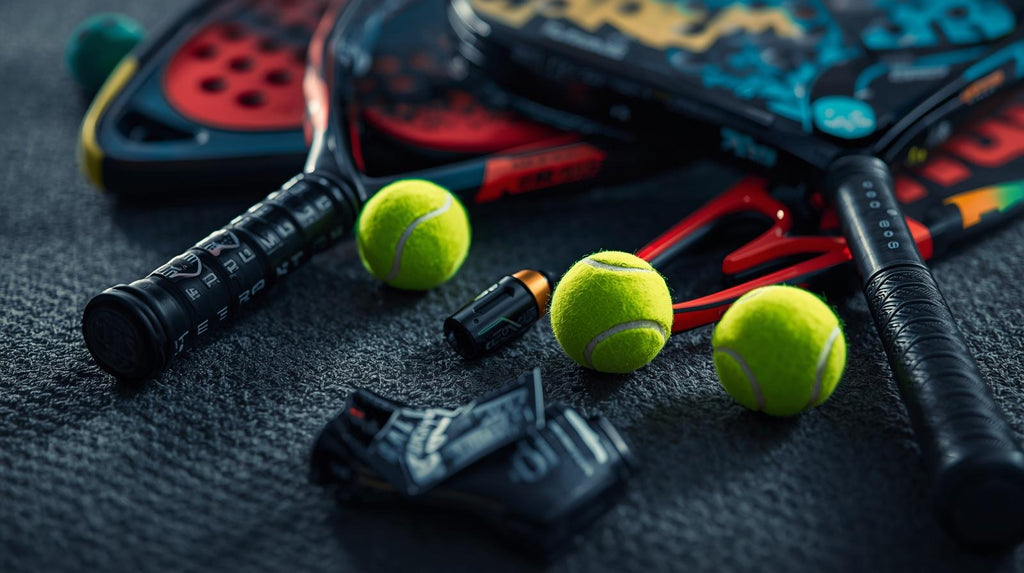
Padel rackets are solid with no strings and feature small holes across the surface. The ball closely resembles a tennis ball but has slightly lower pressure, making it easier to control and ideal for longer exchanges.
Pickleball uses a lightweight paddle made from wood or composite materials and a plastic ball with holes. The ball travels slower and bounces differently than a tennis or padel ball, making pickleball especially beginner-friendly while still allowing for competitive play.
Rules and Style of Play
Padel is almost always played in doubles, emphasizing teamwork, communication, and court positioning. The ability to use the walls creates a more tactical game that rewards patience and smart shot selection.
Pickleball can be played in either singles or doubles and follows straightforward rules that are easy to learn quickly. Serves must be underhand, and players must allow the ball to bounce once on each side before volleying. These rules help level the playing field and make the sport accessible for new players.
Fitness Benefits and Social Appeal
Both padel and pickleball are excellent for staying active and social.
Padel delivers a strong cardiovascular workout, improves agility, and enhances hand-eye coordination. Its doubles format and lively rallies make it highly social and perfect for group play.
Pickleball offers a low-impact workout that’s easy on the joints while still improving balance, reflexes, and endurance. Its welcoming community and relaxed atmosphere make it a favorite for players of all ages and fitness levels.
Which Sport Is Right for You?
Choosing between padel and pickleball often comes down to personal preference. If you enjoy fast-paced rallies, strategic play, and teamwork, padel may be the perfect fit. If you’re looking for a sport that’s quick to learn, accessible, and social, pickleball might be your go-to.
Or better yet—why choose at all?
Try both at Padel & Pickleball and find your favorite!
Whether you’re new to paddle sports or looking to add something exciting to your fitness routine, padel and pickleball offer fun, engaging ways to stay active and connect with others.
Related post
09
Mar
01
Mar
27
Feb

06
Feb

03
Feb


